Infographic

Optical Interface Integrity: Advanced Cleaning for Hyperscale Networks

How the ScaleFibre ClickPRO™ addresses 400G/800G signal degradation through smart mechanical engineering.

As transmission speeds transition from 10G toward 1.6T, the tolerance for physical contamination has reached near-zero. Contamination remains the primary cause of 85% of network outages. The ScaleFibre ClickPRO™ represents a significant advancement in mechanical remediation, combining 800+ cleaning cycles with proven technology to ensure the integrity of optical fiber connectors. The ClickPRO™ delivers the “first-time right” connectivity essential for modern AI workloads and hyperscale architectures.

Click-Style Fiber Optic Cleaning Mechanism

1
Engagement

Single-action push triggers the spring-loaded internal gearing system.

2
Advancement

A fresh section of high-purity cleaning strand is advanced across the tip.

3
Swipe & Rotation

The tip rotates to lift and trap oils and particulates into the fabric.

4
Retraction

The spring-loaded mechanism resets, pulling the tip back and preparing a fresh section of tape for the next cycle.

Why Networks Fail

The vast majority of optical outages originate at the physical interface.

IEC Inspection Zones

Fiber cleanliness is important across all four critical ferrule zones defined by IEC 61300-3-35.

ZERO TOLERANCE

Zone A: Core

Critical

0-25μm area where light is concentrated. Zero defects allowed.

  • Critical for 400G/800G
  • No Scratches Permitted
  • Primary Path for Data

Zone B: Cladding

High Impact

25-110μm area. Contamination here causes signal leakage.

  • Surrounds the light path
  • Potential signal attenuation
  • Migration risk to core

Zone D: Contact

Mechanical

130-250μm outer area. Debris here creates air gaps between cores.

  • Ensures physical contact
  • Affects Return Loss (ORL)
  • Prevents core misalignment

Precision Engineering Metrics

The ClickPRO™ is designed to exceed IEC 61300-3-35 standards, ensuring zero defects in critical zones.

800+

Cleaning Cycles

180°

Tip Rotation

0μm

Defects Allowed (Zone A)

≤50%

Time Saved (vs. Manual)
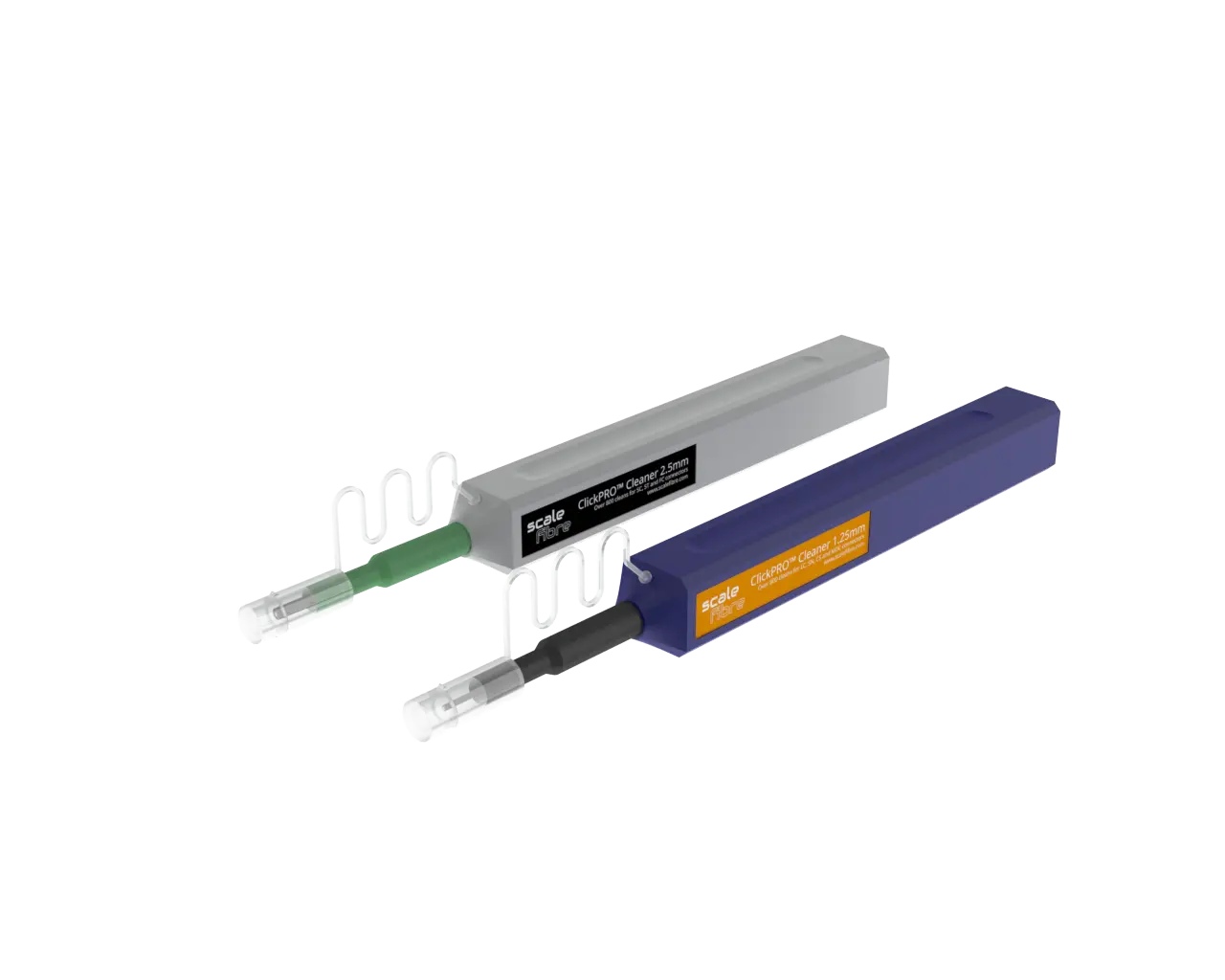
Product Image
Featured Solution

ClickPRO™ Single Fibre Click Cleaner

Push type fibre optic cleaner for SC and LC connectors

View Product Details

Legacy Cleaning Tools

  • Manual Wipes: High risk of cross-contamination and user fatigue.
  • Static Build-up: Dry wiping creates ‘dust magnets’ via triboelectric charging.
  • Limited Capacity: Standard tools offer only 500-750 cleaning cycles.
  • Detached Caps: High risk of losing guide accessories in the field.

ScaleFibre ClickPRO™

  • Dual-Action Rotation: mechanical rotational swipe ensures contaminant trapping.
  • Anti-Static Housing: Dissipates charge to prevent post-clean re-contamination.
  • Industry-Leading: Guaranteed 800+ cleans for maximum ROI.
  • Integrated Design: Fumble-free cap stays attached for rapid bulkhead switching.

Real-World Applications
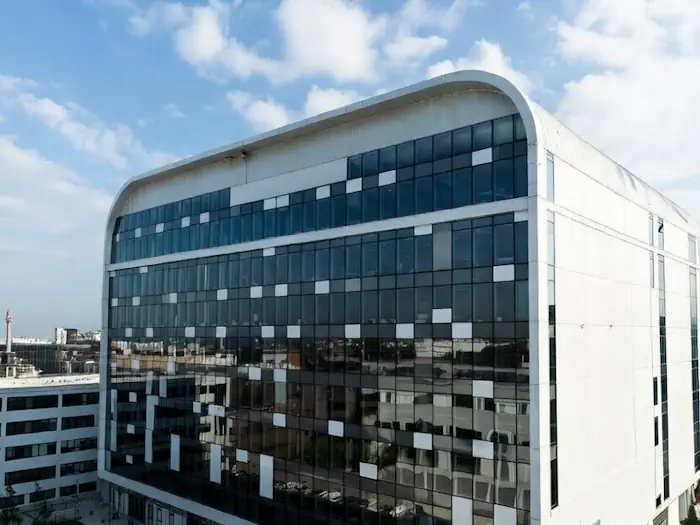
Hyperscale Data Centers

Maintaining thousands of connections in AI clusters with rapid, repeatable cleaning.
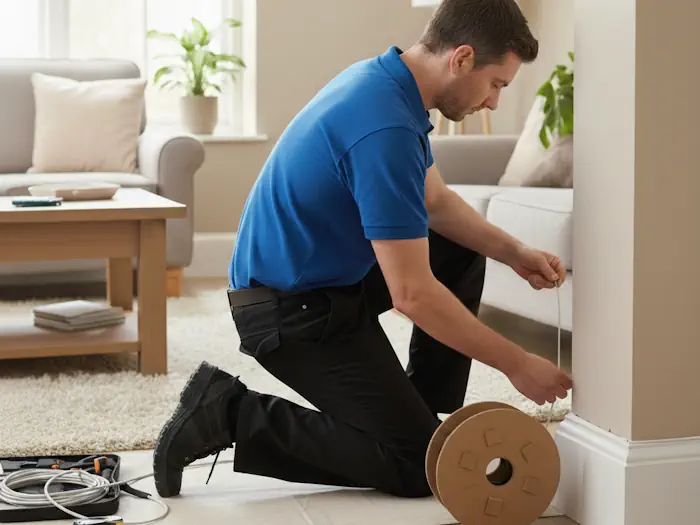
Telecommunications
Telecommunications

Standardizing cleaning protocols to eliminate the 85-90% of outages caused by contaminated interfaces.

Enterprise
Enterprise

Ensuring high-performance connectivity for business-critical infrastructure.

Technical FAQ

+ Can a dirty connector cause permanent physical damage to the hardware?
Yes. In high-power transceivers, like DWDM or Raman amplifier systems, high optical energy density can thermally excite contaminants. This causes debris to melt into the silica end-face, ‘fusing’ the dirt into the glass. These pits and scratches are permanent and cannot be remediated, requiring full connector replacement. With other optical components, dirt or contaminants can create chips or pits in the end-face, leading to permanent increases in loss. Learn more about the real-world impact of ferrule geometry.
+ What are the specific requirements for Zone A (Core) compliance?
According to the IEC 61300-3-35 standard, Zone A (0-25μm for single-mode) has a zero-tolerance policy. No scratches or defects of any size are allowed, as even a 1μm particle can cause catastrophic insertion loss and back-reflection in 400G and 800G systems. For a detailed breakdown of performance standards, see our guide on IEC Fiber Grades A, B, and C.
+ Why is Isopropyl Alcohol (IPA) discouraged for high-speed fiber cleaning?
IPA is hygroscopic and pulls moisture from the air, often leaving ‘halos’ or water streaks on the ferrule. These residues act as an adhesive for dust and can degrade signal performance. Specialized, fast-evaporating optical-grade solvents are required for a proper ‘wet-dry’ cleaning sequence.
+ What is the risk of an air gap caused by Zone D (Contact Zone) debris?
If large particles exist in the Contact Zone (130-250μm), they prevent the two fiber cores from making physical contact. This creates an air gap that destroys Return Loss (ORL) performance, leading to high levels of back-reflection that can blind sensitive high-speed transceivers. This is a critical factor.
+ Why is dual-action rotation superior to a linear wipe?
A linear wipe often smears oils or pushes debris toward the center of the fiber. The ClickPRO™ Single Fiber Cleaner uses rotation to lift contaminants and trap them within the weave of the cleaning strand, ensuring debris is removed from the ferrule surface rather than redistributed across the core.
+ How do I clean MPO or MTP® multi-fiber connectors?
The Single Fiber ClickPRO™ is engineered for LC and SC ferrules. Multi-fiber arrays require the ClickPRO™ MPO Cleaner, which uses a wide-format cleaning strand to scrub the entire 12- or 24-fiber rectangular ferrule found on MPO Trunks. It features a recessed head that allows cleaning of both pinned (male) and unpinned (female) connectors without damaging alignment pins.
+ How does the integrated guide cap improve operational efficiency?
In high-density environments, losing loose dust caps is a primary cause of technician downtime. The ClickPRO™’s integrated flip-cap stays attached to the tool, allowing a seamless transition between cleaning jumpers and bulkhead ports in seconds, reducing total rack cleaning time by up to 50%.
+ When should I transition from dry cleaning to a wet-dry methodology?
Dry cleaning is effective for 90% of environmental dust. However, for ‘stubborn’ contaminants like skin oils, lotions, or salt residue, a wet-dry approach is necessary. Apply a small amount of optical solvent to the tip; the mechanical rotation then uses the fluid to dissolve the bond before the trailing tape dries the surface.
+ What if a ClickPRO™ is not able to clean the contamination?
Some contaminants are difficult to remove. It can be helpful to use fiber optic cleaning fluid with a standalone wipe like WipePRO cleaning wipes. This can allow a deep, thorough clean. It could also be that the ferrule is permanently damaged, and this damage cannot be cleaned.
+ What is the ROI of using a tool with 800+ cleaning cycles?
In hyperscale deployments involving thousands of ports, a tool with 800+ cleans reduces the logistical burden of tool replacement and environmental waste by 60% compared to standard 500-clean models.
+ How does the 'Click' feedback ensure network reliability?
The mechanical ‘click’ provides both audible and tactile confirmation that the entire rotation and tape advancement cycle is complete. This ensures consistency across a large workforce, preventing incomplete cleanings regardless of operator fatigue.

Optimize Your Physical Layer

Upgrade to ScaleFibre ClickPRO™ for zero-defect network performance.

View ClickPRO™ Series

Find out how to easily keep your network clean.