

Technical Comparison: G.657.A1 vs. G.657.A2
A deep dive into the two tiers of bend-insensitive fiber (BIF) to determine when 10mm or 7.5mm bend radii are required.
G.657.A1 has become the modern standard because it fixed the bend-sensitivity issues that plagued G.652.D in tight spaces. However, as hardware gets even smaller and patching gets denser, G.657.A2 has emerged for those extreme scenarios where even a 10mm bend is too large. Understanding the trade-off between the 10mm (A1) and 7.5mm (A2) bend radius is key to building a network that won’t fail under physical pressure.
G.657.A1 (The Standard BIF)
- ✕Bend Radius: 10mm minimum.
- ✕Compatibility: Excellent backward compatibility with legacy G.652.D backbones.
- ✕Utility: The ‘sweet spot’ for most urban and multi-dwelling unit (MDU) runs.
- ✕Availability: Scalefibre’s default for most assemblies due to high performance-to-cost ratio.
G.657.A2 (Advanced Resilience)
- ✓Bend Radius: 7.5mm minimum; significantly more forgiving than A1.
- ✓Enhanced Design: Often utilizes a more aggressive trench profile for light confinement.
- ✓Utility: Mandatory for high-density patching and ultra-compact customer premises.
- ✓Cost: Premium pricing due to tighter manufacturing tolerances and lower volumes.
The Margin of Error
Visualizing the performance gap when fiber is pushed to its physical limits.
25%
Tighter Bend (G.657.A2)0.1dB
G.657.A2 Loss @ 10mm100%
G.652.D CompatiblePremium
Cost Profile (G.657.A2)ITU-T Standard Tiers
Correct fiber choice balances the physical constraints of the installation environment with cost and compatibility.
G.652.D
Industry WorkhorseThe global standard for non-dispersion shifted fiber. Optimized for 1310nm operation with a full-spectrum window from 1260nm to 1625nm.
- Zero dispersion at 1310 nm
- Lowest initial purchase cost
- Higher loss from macrobending
G.657.A1
Bend InsensitiveThe first tier of bend-insensitive fiber. Designed for urban distribution where tight corners and crowded ducts are frequent.
- 10 mm minimum bend radius
- Full backward compatibility
- Reduces failure 'truck rolls'
G.657.A2
Extreme ResilienceEngineered for customer premises and high-density patching. Can be routed around door frames and wall cavities with zero signal impact.
- 7.5 mm bend radius (G.657.A2)
- Trench-assisted light confinement
- Maximum installation flexibility
Macrobending Loss at 1625nm (dB)
Critical ResilienceApplication Specifics
Where the 2.5mm difference in bend radius actually matters.
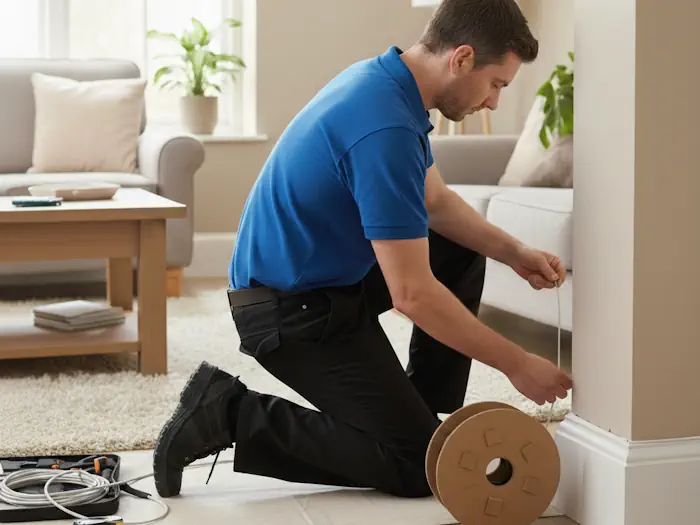
FTTH Internal Drops
G.657.A1 handles typical residential routing around corners and through conduits without signal drop-off.
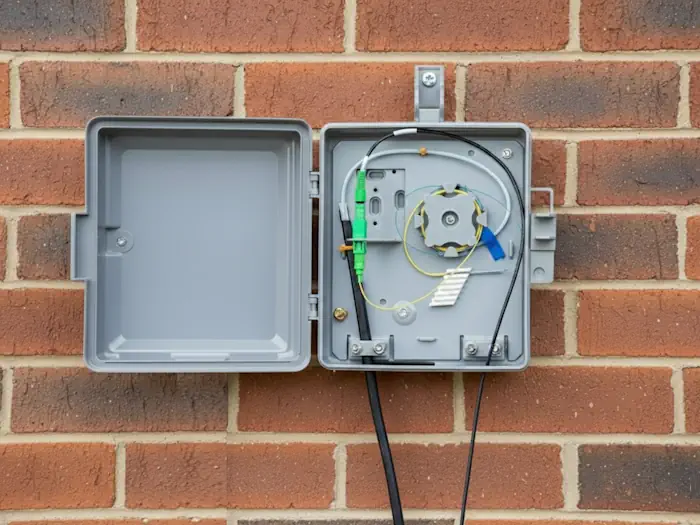
Micro-Enclosures & ONTs
G.657.A2 is preferred for ultra-small wall outlets and ONT termination boxes where fiber slack is tightly coiled.
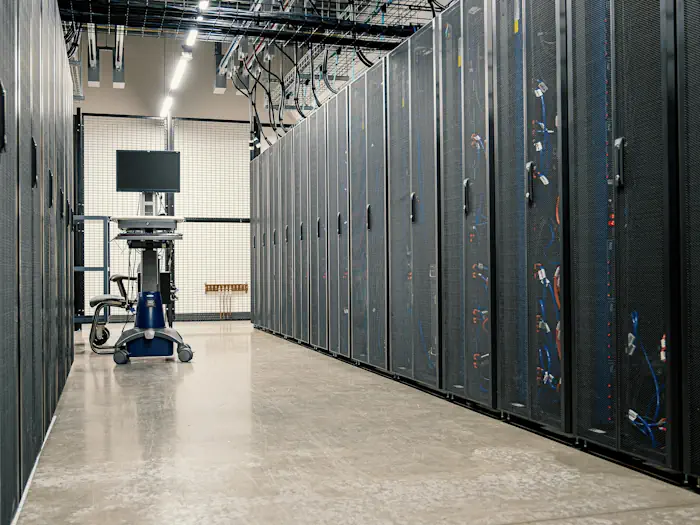
High-Density Data Racks
G.657.A2 is the popular for 400G/800G environments where high-density patching leads to unavoidable tight cable bends.
Technical FAQ
Selecting the Right Bend-Insensitive Fiber
ScaleFibre defaults to G.657.A1 for performance and value, but we offer G.657.A2 for your most demanding high-density projects.
Speak to an EngineerAvailable for custom patch cord and assembly configurations.